Pillow guide · 2026
Three pillow types, one honest comparison
If you wake up stiff most mornings, the pillow is the cheapest thing to check first — before the mattress, before anything else.
Our pick: contoured ergonomic pillow · 1 pillow $59.99 · 60-day return window per seller
Why the pillow, and not the mattress
You spend about a third of your life with your head on the same object. The neck has a natural forward curve, and it needs support through the whole night — a pillow that is too flat, too thick, or that collapses by 3 a.m. leaves the head and neck in a position the body isn’t built to hold for eight hours.
That’s why morning stiffness is usually a fit problem, not a mattress problem. And fit is cheap to fix.
The 30-second check
- Height vs. position. Side sleepers need the most height (to fill the shoulder-to-ear gap), back sleepers less, stomach sleepers very little.
- Does it hold? Press it flat and let go. If it stays flat, it will be flat at 3 a.m. too.
- Lie down and look level. In your usual position, your head shouldn’t tilt up or sink down.
- Heat. If you wake up and shift position constantly, the pillow may be trapping heat.
The three types compared
1. Standard memory foam
One solid block, traditional shape — the most common upgrade from a cheap pillow. The problem is that it is one-size height: no contour to hold the neck curve, so it either pushes the head up or lets it sink. Classic foam also traps heat.
Best for: people with no complaints. If you already wake up stiff, it usually isn’t solving the fit problem.
2. Down / feather
Soft and hotel-like, but with no real structure: the filling flattens and shifts overnight, so by morning you’re essentially on a flat surface. It also needs constant fluffing and isn’t the choice for sensitive noses.
Best for: softness over support — decorative or occasional use.
3. Contoured ergonomic pillow — our pick
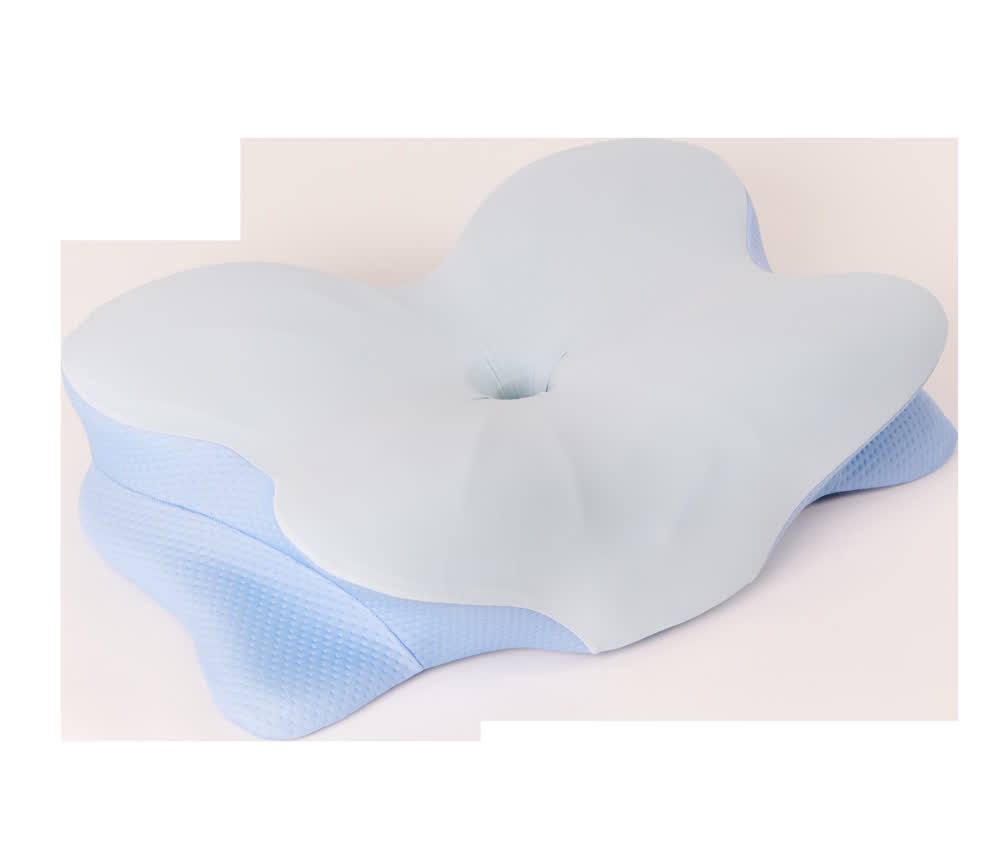
This is the category designed to do what the other two don’t: hold the head while supporting the curve of the neck. The specific product referenced here is Derila Ergo.
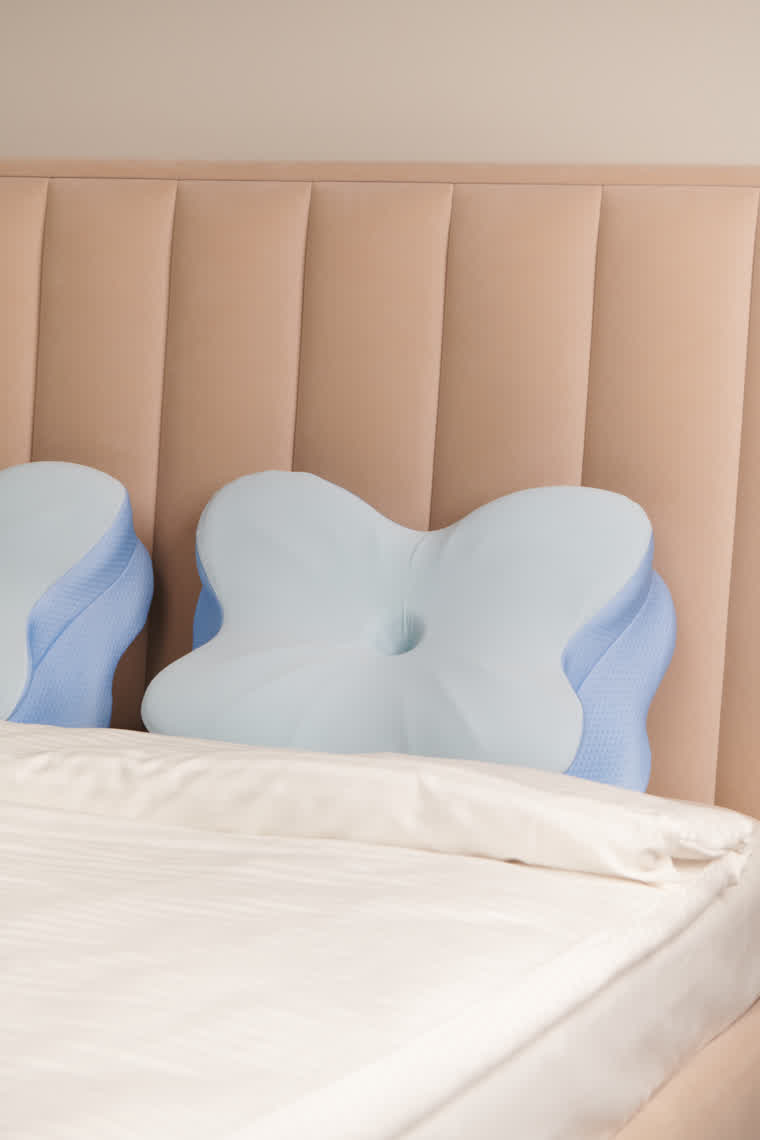
- Butterfly contour — lower centre channel cradles the head; raised wings follow the shoulder line.
- Cooling memory foam — adds a cooling layer to the heat problem classic foam is known for.
- Hypoallergenic, 54 × 36 cm — fits standard pillowcases.
- 60-day return window — long enough to actually judge it (per seller).
The manufacturer reports that 82% of users say they wake up more energized* and 85% report better sleep* — figures published on the vendor’s own page, not measured by us. No pillow is a medical device; this one doesn’t treat or cure anything.
1 pillow $59.99 ($149.98) · 2 pillows $99.98 · family pack 3+1 $149.96
Check today’s price →Price and promotion set by the seller — confirm on the product page
Quick comparison
| What matters | Memory foam | Down / feather | Contoured |
|---|---|---|---|
| Neck support | Flat, no contour | Minimal — flattens | Butterfly contour |
| Stays cool | Can trap heat | Good | Cooling layer |
| Hypoallergenic | Varies | No | Yes |
| Needs fluffing | No | Constantly | No |
| Return window | Varies | Varies | 60 days (per seller) |
Questions people actually ask
Will this shape work for side sleepers?
Contoured designs are typically most useful for side sleepers: the raised side sections follow the shoulder line while the lower centre holds the head. They also suit back sleepers, who generally need less height.
Is it hot to sleep on?
Heat is the classic complaint about memory foam. This one adds a cooling layer on top of the foam, which is the manufacturer’s answer to it. If you sleep hot, cooling construction is worth checking on any pillow.
What if I don’t like it?
The seller advertises a 60-day return window — the practical way to judge a pillow, on your own neck, over several nights. Confirm the current terms on the seller’s page before buying.
Is this a paid review?
It’s an affiliate page: we earn a commission if you buy through our links, at no extra cost to you. We don’t claim to have lab-tested the product and we haven’t invented any results. Figures marked * are the manufacturer’s own.
The bottom line
Morning stiffness is usually a fit problem. Among these three categories, only the contoured one is built to support the neck curve, stay cooler than classic foam, and let you send it back if it doesn’t work.
See the current price →1 pillow $59.99 (from $149.98) · 2 pillows $99.98 · 60-day return window per seller
How this comparison was put together
This is an editorial comparison based on published information — not a laboratory test.
- Construction — how each category supports the neck curve, handles heat, and what it’s made of, from publicly available specs.
- Buyer risk — return window weighted heavily: a 60-day policy is a lower-risk recommendation than none.
- Value — price relative to what it delivers for the stated problem.
We did not run clinical or lab tests. Figures marked * are manufacturer-reported. Prices and guarantees are set by the seller and can change.
* Manufacturer-reported figures published on the vendor’s product page. Individual results vary. Informational only, not medical advice. Rested Neck is an independent publisher, not affiliated with the manufacturer other than through the affiliate program above.